

As healthcare becomes increasingly digitalised, there is enormous potential for technology to generate efficiency and drive enhanced outcomes. Yet many organisations are still operating with disparate technology systems, or relying on time-consuming, manual processes which impede efficiency and affect overall care outcomes.
Driving change and unlocking efficiency in healthcare is all about creating digital connections— between systems, data and people—in every part of the organisation: front, middle, and back office.
Here’s what this can look like with the right technology in place.
Front office: improved experiences for patients and clinicians
Optimising the ‘front office’ of an organisation, where interactions happen between patients and healthcare staff, is crucial in transforming experiences for all.
While experiences differ from practice to practice, it’s not uncommon for patients to face a lengthy wait for their appointment, especially if it’s with a specialist.
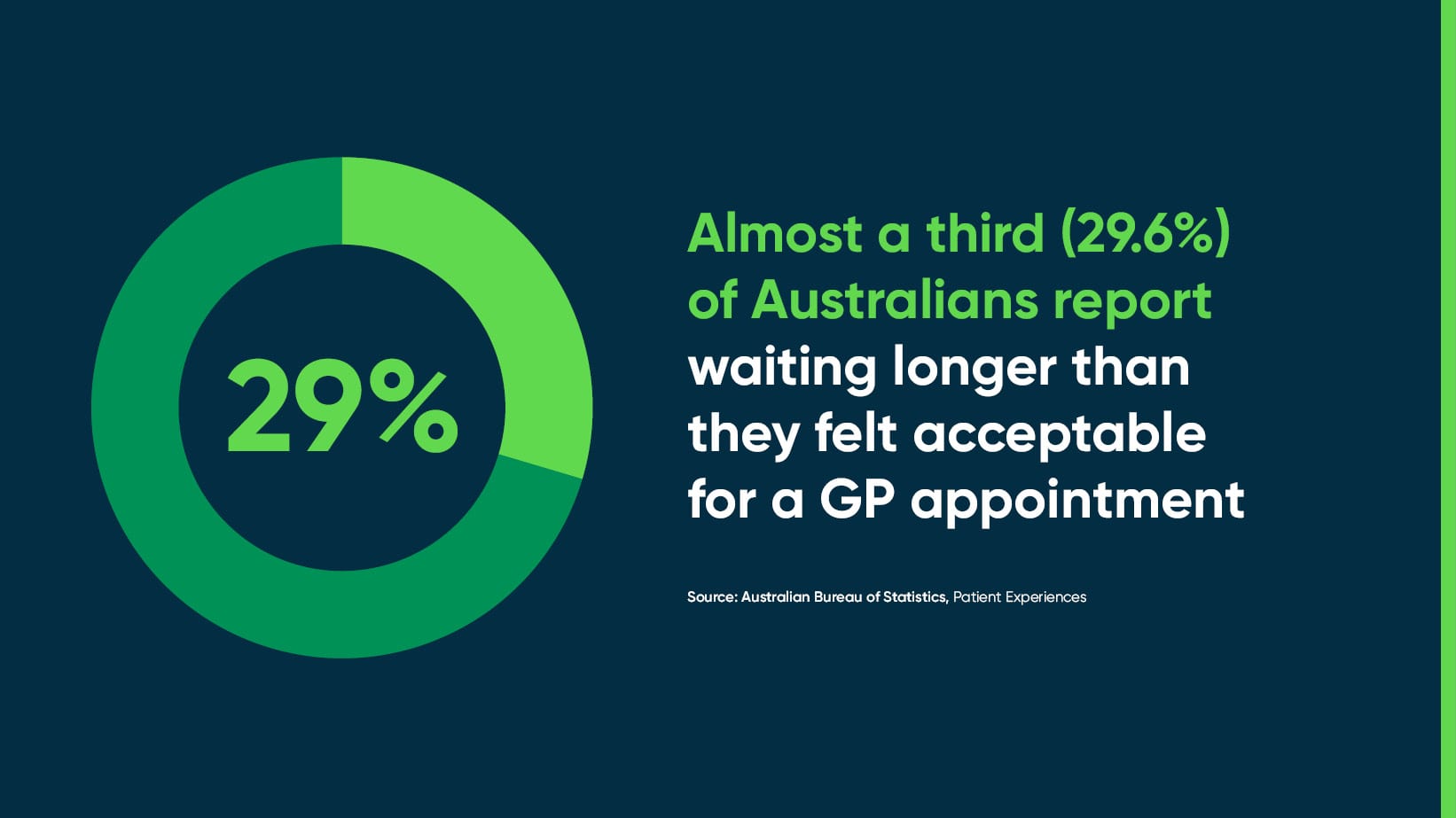
Almost a third (29.6%) of Australians have reported waiting longer than they felt acceptable for a GP appointment, and for those living in remote and regional areas, it’s even higher: 37.5%.xi
A recent report by the ABC reveals that in some parts of the country, Australians are waiting longer than six years to see crucial specialists including neurosurgeons, ear, nose and throat surgeons, and immunologists.xii
The current ‘front office’ healthcare experience isn’t ideal for clinicians either. Most report feeling overworked, and 70% say they have suffered burnout.xiii
Administrative responsibilities consume a significant amount of clinicians’ time, affecting their availability for patients and their work-life balance.
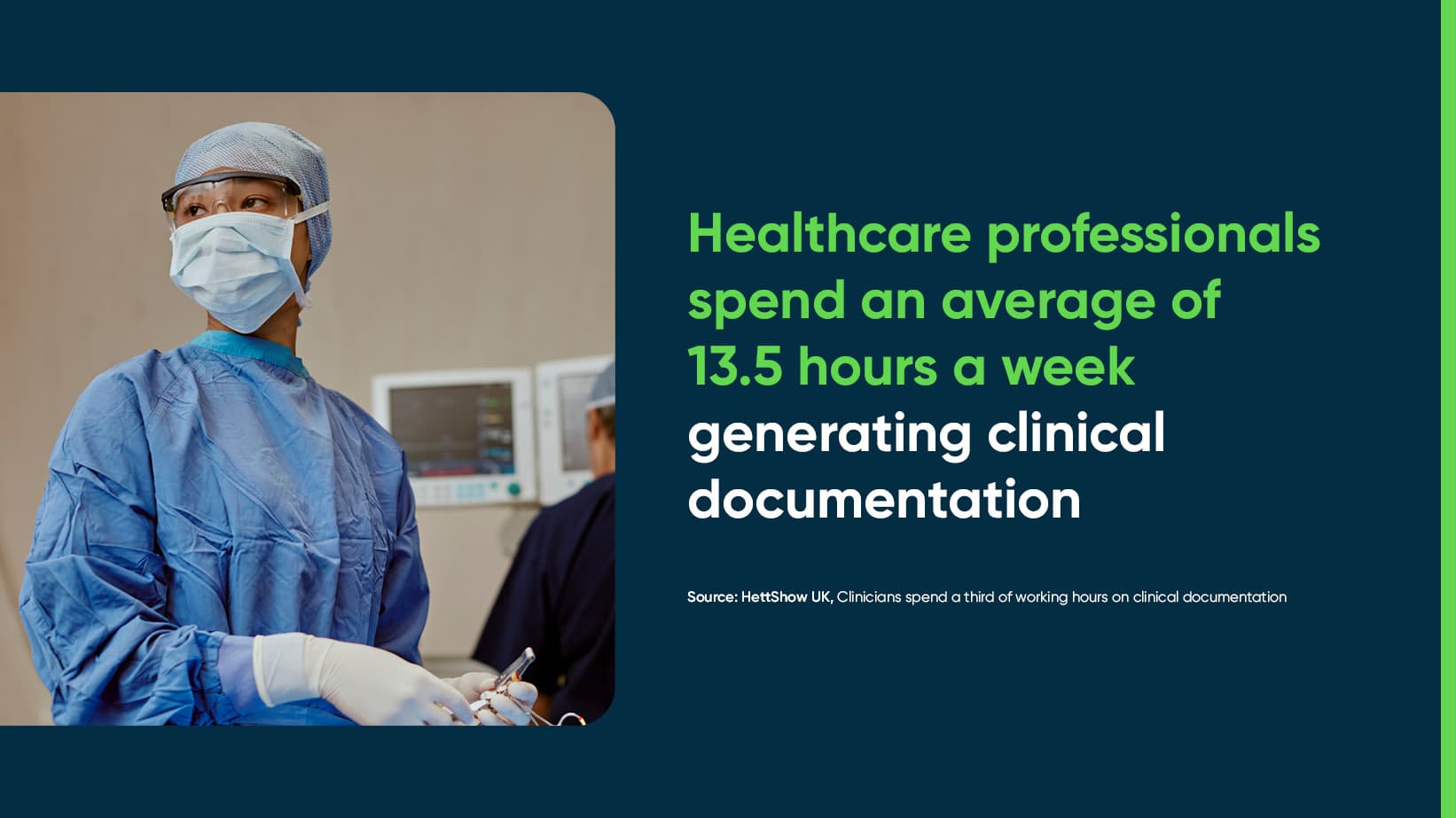
A recent survey found healthcare professionals spend an average of 13.5 hours a week generating clinical documentation—a 25% increase in the last 7 years.xiv
The right technology has the potential to drive significantly enhanced experiences and outcomes at the ‘front end’ of healthcare organisations through:
- Less administration for clinicians, thanks to AI-led workflows and automated processes, such as the writing of referral letters, readmission forms and case notes.
- Faster and more accurate diagnoses thanks to AI-led analytics and seamless information flows across the organisation and with third-party providers such as radiologists or pathologists.
- Less on-the-job fatigue for clinicians with enhanced scheduling and more streamlined ways of working.
- Shorter waiting periods for patients and more reliable access to healthcare services.
Along with streamlining clinician workload, enhancing the front office experience is “all about providing consumer grade experience to patients, especially when they are communicating with hospitals or health systems, trying to understand more about their health condition,” says Dr Seemit Dhage, ServiceNow’s Head of Healthcare Industry.
Middle-office: mitigating risk and enabling insight
The ‘middle office’ of a healthcare organisation is typically responsible for managing risk and strategic decision-making.
Many organisations are operating with disparate technology systems which limit their ability for whole-of-organisation insight and analysis. In the middle office, data silos can also be a major obstacle to efficiency.
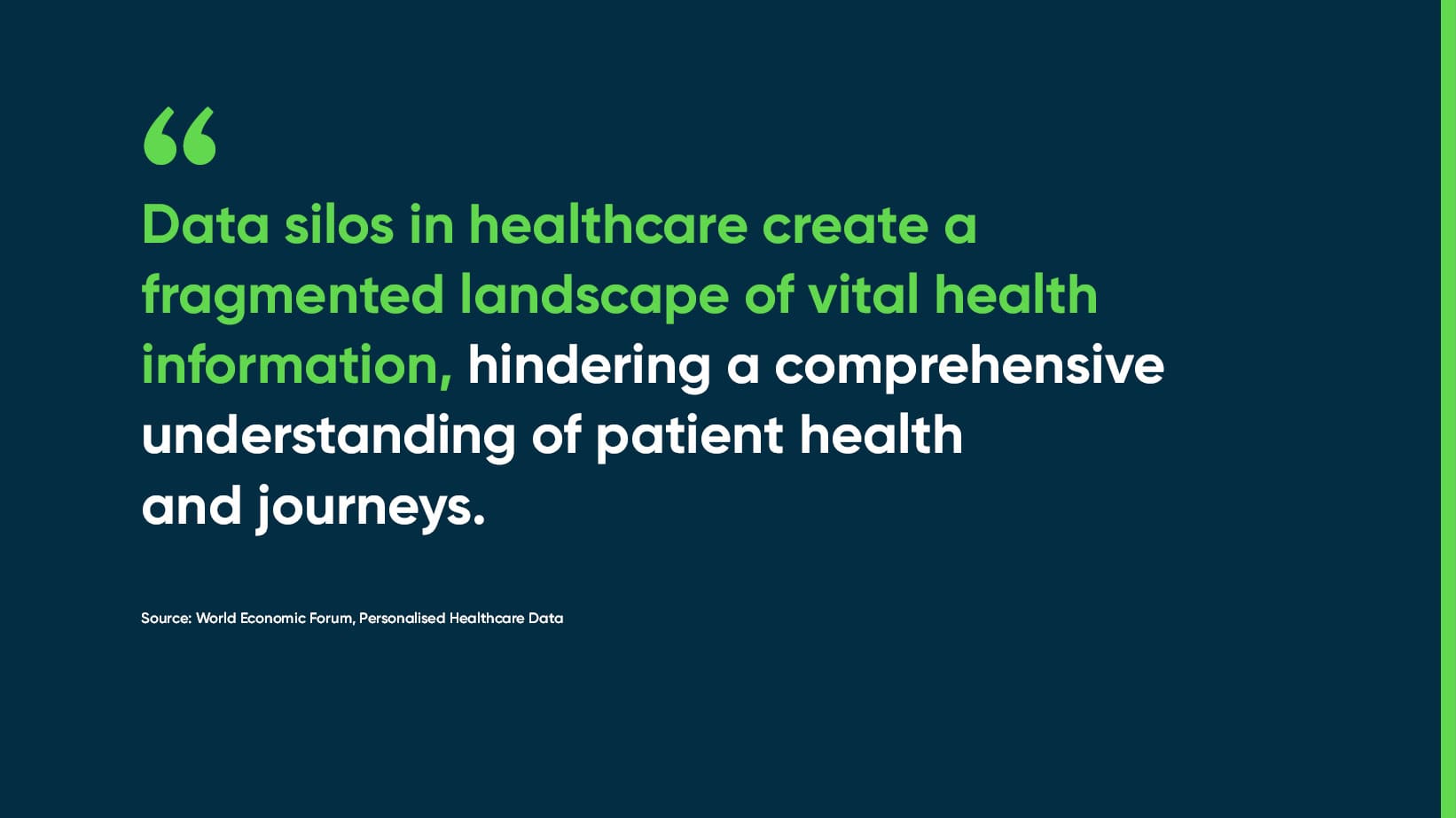
“Data silos in healthcare create a fragmented landscape of vital health information, hindering a comprehensive understanding of patient health and journeys,” says a report by the World Economic Forum.xvi
The right technology platform can transform the middle office of a healthcare organisation by bringing disparate systems together and enabling a smooth and seamless flow of data across the organisation. This supports:
- Overarching analysis of data and information to find patterns and extract insights that can drive change and improvement.
- Automated alerts or actions that can help mitigate risk.
- 24/7 monitoring of equipment, avoiding unnecessary maintenance and enhancing compliance.
- Robust security and protection of patient data.
“Efficiency in the middle office is about helping organisations run their operations more efficiently and lowering risk, whether it’s purchasing medical devices or managing patient throughput… it’s about integrating core systems and ensuring everything works together,” says Dr Dhage.
Back-office: optimising core internal functions
The ‘back office’ of a healthcare organisation, which includes functions such as HR, finance and IT, is often reliant upon disparate and disconnected IT systems which can result in limited insights and inefficiency.
“To deliver optimal results, healthcare organisations need a single platform that pulls together all their core business services, like IT and HR, to avoid inefficiency,” says Dr Dhage.
The right technology can play a key role in evolving the back office operations of a busy healthcare organisation by:
- Laying a foundation for digital transformation and innovation, enabling the organisation to leverage things such as telemedicine, IoT and AI.
- Enabling employees to self-service as much as possible by putting all the information they need about their career, and their development, at their fingertips.
- Streamlining the onboarding process, so new employees can be quickly brought up to speed with the information they need.
How ServiceNow can help
ServiceNow makes healthcare human by connecting teams, streamlining processes and securely integrating systems, so you can change lives for the better.
It connects every part of your healthcare organisation, front, middle and back office, to ensure everyone has the information and the workflows they need to work as efficiently as possible.
Learn more about how ServiceNow can create connections across your healthcare organisation.
x Australian Bureau of Statistics, Patient Experiences, https://www.abs.gov.au/statistics/health/health-services/patient-experiences/latest-release
xi Australian Bureau of Statistics, Patient Experiences, https://www.abs.gov.au/statistics/health/health-services/patient-experiences/latest-release
xii ABC, Specialist wait times blow out to years, https://www.abc.net.au/news/2023-04-20/specialist-wait-times-blow-out-years-waiting-list/102232032
xiii Employsure, Who’s caring for the carers, https://employsure.com.au/blog/whos-caring-for-the-carers-healthcares-frontline-mental-health-problem
xiv HettShow UK, Clinicians spend a third of working hours on clinical documentation, https://blog.hettshow.co.uk/research-reveals-clinicians-spend-a-third-of-working-hours-on-clinical-documentation
xv HettShow UK, Clinicians spend a third of working hours on clinical documentation, https://blog.hettshow.co.uk/research-reveals-clinicians-spend-a-third-of-working-hours-on-clinical-documentation
xvi World Economic Forum, Personalised Healthcare Data, https://www.weforum.org/agenda/2024/02/personalized-healthcare-data/
xvii World Economic Forum, Personalised Healthcare Data, https://www.weforum.org/agenda/2024/02/personalized-healthcare-data/